
From Plant to Packet: How Laundry Detergent Sheets Are Made
If you've made the switch to laundry detergent sheets, you already know they simplify your wash day. But have you ever wondered what goes into making them? Unlike the liquid detergents that have dominated supermarket shelves for decades, laundry sheets represent a fundamentally different approach to cleaning clothes — one that starts with plants, not petrochemicals.
Understanding how your detergent is made matters. It's the difference between trusting a product because of its marketing and trusting it because you know exactly what's inside. Here's a closer look at how laundry detergent sheets go from plant-based ingredients to your washing machine.
What Are Laundry Detergent Sheets Made Of?
The most important thing to know about modern laundry sheets is what they don't contain. No phosphates, no parabens, no phthalates, no optical brighteners, and no synthetic fragrances. Instead, the ingredients start with renewable plant sources.
The primary cleaning agents in quality laundry sheets come from two main sources:
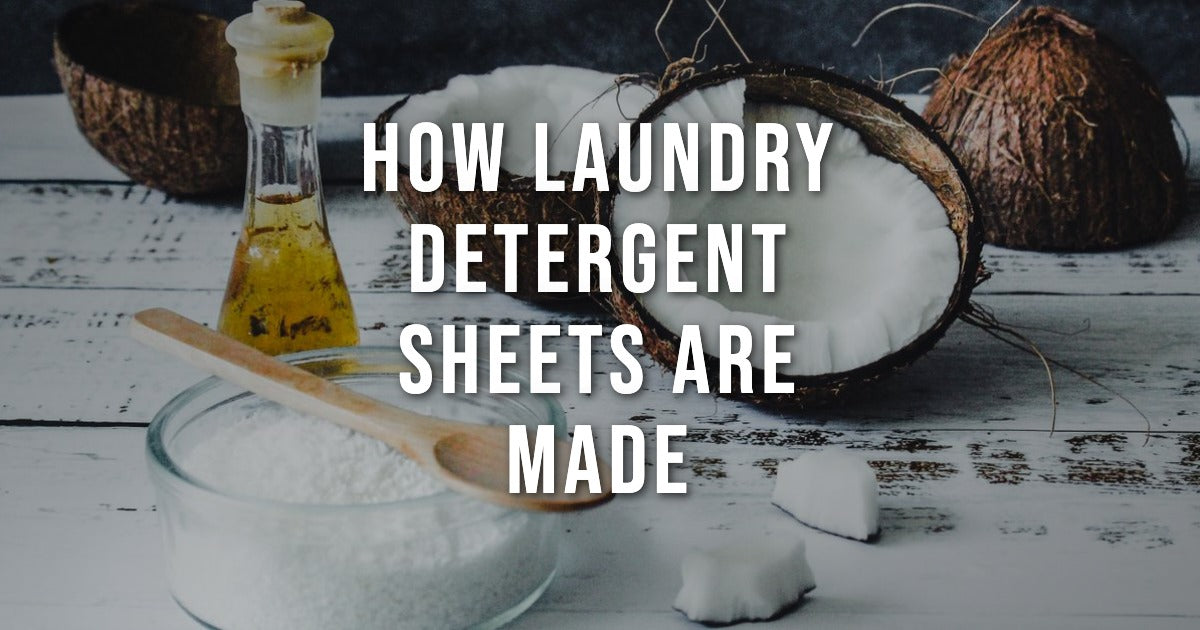
- Coconut-derived surfactants — These are the molecules that do the actual cleaning. Derived from coconut oil, they lower the surface tension of water, allowing it to penetrate fabric fibers and lift away dirt, oil, and stains.
- Corn-based enzymes and builders — Enzymes (like protease, amylase, and cellulase) target specific types of stains — proteins, starches, and cellulose-based grime. Corn-derived alcohols and other plant-based compounds help stabilize the formula and improve cleaning performance.
These ingredients are combined with a small amount of biodegradable binding agent to create the sheet form. The result: a concentrated cleaning strip that dissolves completely in water, leaving nothing behind but clean clothes.
The Manufacturing Process Step by Step
1. Ingredient Sourcing and Blending
The journey begins with sourcing certified sustainable coconut oil and non-GMO corn. The coconut oil is processed to extract fatty alcohols, which are then converted into surfactants through a chemical process called ethoxylation — a method that's been used safely for decades in everything from baby shampoo to toothpaste. Meanwhile, corn is fermented to produce the enzymes that give the sheets their stain-fighting power.
These raw ingredients arrive at the manufacturing facility as concentrated liquids and powders. They're precisely measured and blended into a proprietary cleaning formula. Because the final product is concentrated, the formula uses far less water than liquid detergent — which means less weight, less packaging, and less energy spent on shipping.
2. Sheet Formation (Non-Woven Technology)
This is where the magic happens. The liquid cleaning formula is applied to a thin, non-woven substrate using a process called saturation coating. Think of it like a printer applying ink to paper, but on an industrial scale. The substrate itself is made from plant-based cellulose fibers, making the entire sheet biodegradable and compostable.
The saturated material passes through precision rollers that control exactly how much detergent is deposited. This ensures every sheet contains a consistent, optimized dose — no guessing, no over-pouring, no wasted product.
3. Drying and Curing
After coating, the sheets move through a controlled drying tunnel where warm air gently removes excess moisture. This transforms the wet coating into a stable, dry film that's locked onto the cellulose substrate. The result is a thin, flexible sheet that's sturdy enough to handle without crumbling but dissolves instantly in water.
The drying process also activates the cleaning enzymes. Heat, when applied at the right temperature and duration, converts dormant enzyme powders into their active, stain-fighting form — a bit like baking activates the yeast in bread.
4. Cutting and Packaging
Once dried and cured, the large rolls of sheet material are cut into individual strips. Each strip is precisely measured to deliver the right cleaning power for a standard load of laundry. Because the sheets are concentrated, one full strip can handle even moderately soiled loads, and for smaller or lighter loads, you can simply tear the strip in half.
The cut strips are counted and stacked, then sealed in plastic-free, compostable packaging. At Reef Sheets, each pack contains 32 full-size strips — which translates to 64 loads of laundry when you tear them in half for smaller loads. The packaging itself is made from renewable plant materials and can be composted at the end of its life.
Why the Manufacturing Process Matters for You
The way a detergent is made directly affects your experience using it. Here's what the plant-based, concentrated sheet process delivers:
- Less waste — No giant plastic jugs, no measuring caps, no heavy shipping boxes. A pack of 64 loads weighs about as much as a single bottle of liquid detergent.
- Better control — With liquid detergent, it's easy to use too much. With sheets, the dose is built in. Tear in half for light loads, use the whole strip for heavy ones.
- Gentler on skin — Plant-based surfactants and enzymes are naturally milder than petroleum-derived alternatives. No harsh chemicals means less irritation for sensitive skin.
- Works in any temperature — Because the sheets dissolve completely in cold water, you can wash in cold without worrying about residue. Cold water saves energy and is better for your clothes.
Are Laundry Detergent Sheets as Effective as Liquid?
Short answer: yes, and in some ways more so. Here's why:
Liquid detergents are typically 60-80% water. That means you're paying to ship a heavy product that's mostly water. The cleaning ingredients in liquid detergent degrade over time, especially once the bottle is opened and exposed to air. Sheets, because they're dry and concentrated, maintain their cleaning power until the moment you use them.
The enzymes in sheet detergents — the components that break down protein stains, grass, and food residue — are actually more stable in dry sheet form than in liquid suspension. This means your stain-fighting power is preserved longer, giving you better results wash after wash.
What This Means for the Planet
The environmental benefits of laundry sheets go beyond what you see in your laundry room. By manufacturing a concentrated product that's 90% lighter than liquid detergent, the supply chain uses significantly less fuel for transportation. Fewer trucks on the road, fewer emissions, less cardboard wasted on heavy-duty shipping boxes.
And because the sheets are completely biodegradable — from the cleaning agents to the sheet substrate to the packaging — there's no plastic waste heading to the landfill or the ocean. No microplastics in the waterways. No petroleum-based chemicals in the ecosystem.
The Bottom Line
Laundry detergent sheets prove that effective cleaning doesn't require a chemistry lab full of synthetic chemicals. Starting with renewable, plant-based ingredients and using smart manufacturing techniques, it's possible to create a product that's genuinely better for your clothes, your skin, and the environment.
The next time you drop a sheet into your washer, you can feel good knowing it started its journey on a coconut farm or a cornfield — not an oil rig. And when you choose Reef Sheets, you're supporting a cleaner, more transparent approach to laundry that works as well for your family as it does for the planet.